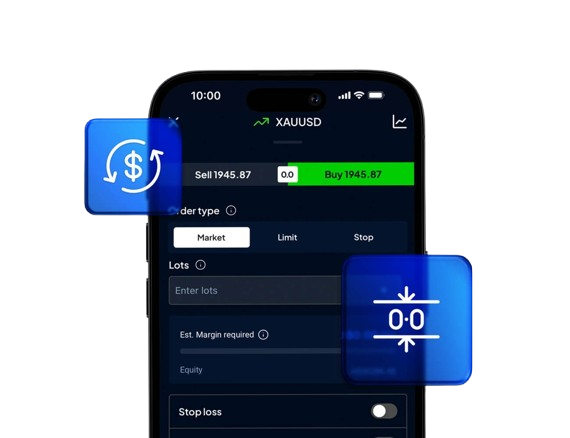
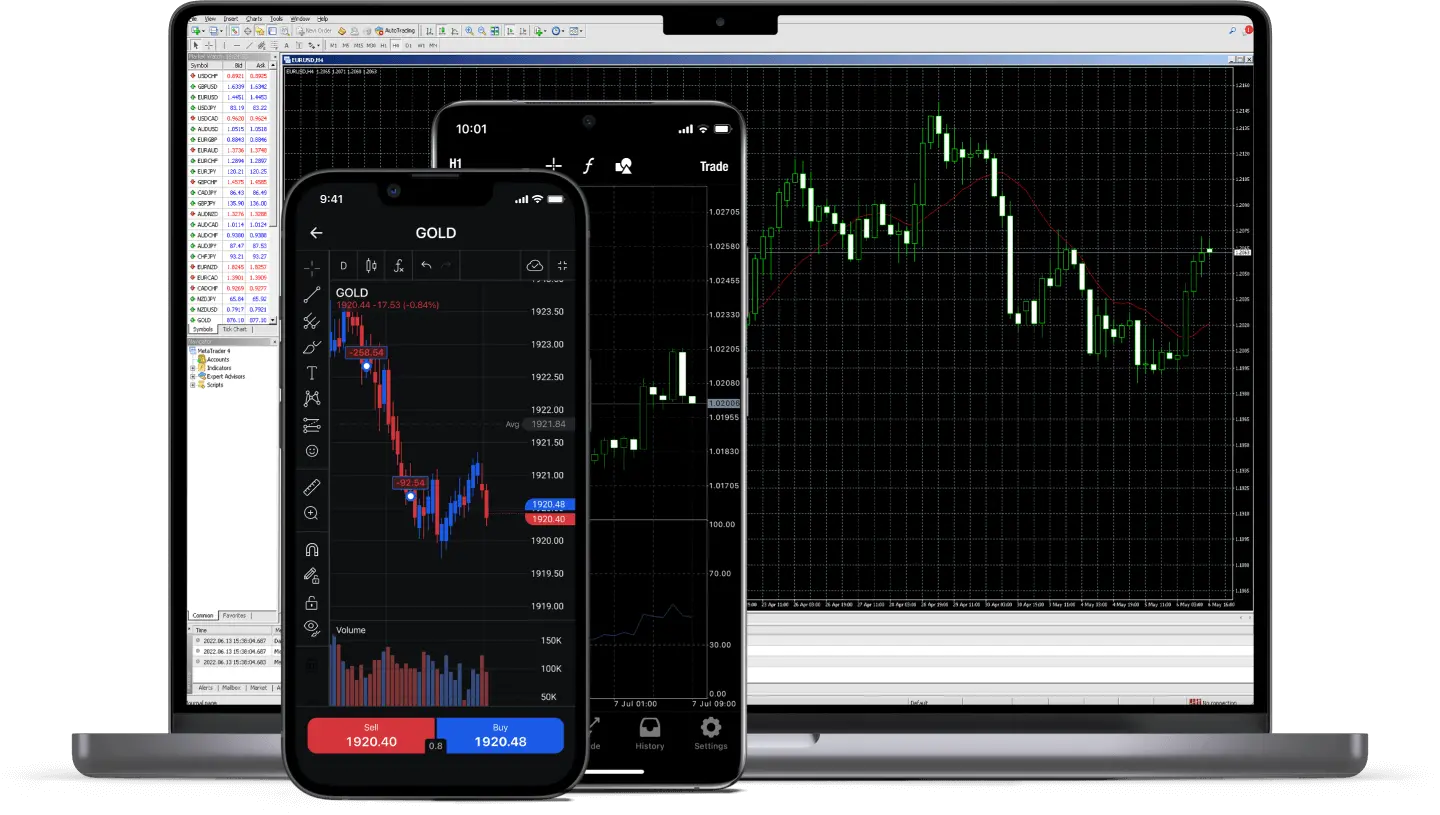
The foreign exchange market (FX) as a whole, consists of many types of markets, including Spot FX, Future derivatives, Forward Derivatives, and finally the CFD derivatives market, which is the most popular for retail clients. All forex trading transactions combined make up the largest and most liquid financial market, with an average daily volume of over $5 trillion.
The FX CFD derivatives market is made up of buyers and sellers, the main participants being large international banks, who place orders via electronic trading systems. This market is traded OTC (not traded on any regulated exchange) and as such there is no uniform price but each of the main international banks is providing its own quotes with the spot market acting as the point of reference for the quotes provided.
It is worth mentioning that the spot FX market is also an OTC market dominated by the large international banks.
In forex trading, spot price of a currency pair is influenced by several factors, such as the economic outlook and geopolitical events in that region, as well as news data releases which may be perceived positively or negatively by the market.
Contracts for difference (CFDs), allow traders to buy (go long) or sell (go short), and make profit or loss from price movements, without having to physically purchase and exchange the underlying currency.
FX is quoted in pairs, with each representing a global currency or economy. The first currency is called the ‘base’ currency (representing the volume you wish to trade) and the second is called the ‘term’ or ‘quote’ currency (representing the current exchange rate).
For example, the price of EUR/USD represents the amount of $USD that can be exchanged for €1.
EUR/USD = 1.11361
This means that currently, €1 is equal to $1.11361
Prices are constantly fluctuating based on market conditions.
To put it simply, traders would go long if they believe that the base currency will rise in value against the term currency and would profit from an increase in price. On the other hand, if traders’ believe that the value of the base currency will fall in relation to the term, they will place a sell trade to try to profit from falling prices. If prices move in the opposite direction to the traders’ forecast, they will make a loss.